
AI Is Helping Solve the Global Water Crisis — And Google Is Putting Money Behind It

📰 The Scoop: According to Google's official sustainability blog, the company has announced its 2026 water stewardship portfolio, a collection of investments and partnerships aimed at improving water security for communities around the world. The initiative uses AI-driven tools to analyze water usage patterns, predict shortages before they happen, and help cities and farms use water more efficiently. Google is partnering with nonprofits, local governments, and research institutions to deploy these tools in water-stressed regions. This builds on Google's earlier commitments to replenish more water than it consumes in its own data center operations.
🧠 What This Means: Think of it like having a very smart early-warning system for your pipes, except instead of your house, it's watching entire river systems, aquifers (underground layers of rock that hold water), and municipal water grids. AI is particularly good at this kind of problem because it can crunch enormous amounts of data (rainfall patterns, crop irrigation schedules, industrial usage, population growth projections) and spot trouble coming months before a human analyst might catch it. What used to require a team of hydrologists and years of study can now be modeled and updated in near real-time. This doesn't replace the science, it supercharges it.
🔎 Why It Matters To You:
If you live in a drought-prone area (California, the American Southwest, Southern Europe, large parts of Africa and South Asia), AI water management tools could directly influence when and how water restrictions are imposed in your community and potentially prevent them entirely by catching inefficiencies upstream, literally and figuratively.
Before this kind of AI existed, water managers relied heavily on historical averages and seasonal guesswork, which increasingly fails in an era of climate unpredictability. Now, systems can learn from real-time satellite imagery, sensor networks, and weather models simultaneously, like upgrading from a paper map to live GPS navigation.
If you're a farmer or work in agriculture, precision water tools could mean the difference between a viable growing season and devastating crop loss. These tools are increasingly being designed for accessibility in lower-income farming communities, not just industrial agribusiness.
Watch for whether "open access" is real here. The sustainability tech community is asking hard questions about whether AI water tools built by large corporations will genuinely reach the communities that need them most, or whether they'll primarily benefit wealthy municipalities that can afford the infrastructure to use them.
🔮 Looking Ahead: Water scarcity is expected to affect over 5 billion people by 2050 according to UN projections, so the urgency here is real and growing. The interesting question isn't whether AI can help (it demonstrably can) but whether the tools get deployed equitably and fast enough to matter at scale. Google's investment signals that big tech sees sustainability as a serious long-term business and reputational priority, which could accelerate funding across the whole sector. Keep an eye on whether competing platforms from Microsoft, Amazon, and emerging climate-tech startups start announcing similar portfolios in the months ahead. That kind of competition usually speeds up how quickly the tools reach the ground.
NVIDIA's Nemotron Coalition: "Open AI for Everyone." But Is It Really?

📰 The Scoop: According to NVIDIA's official newsroom, the company has launched the Nemotron Coalition, a collaboration of leading AI research labs from around the world aimed at building powerful "open frontier models", meaning AI systems that are openly shared rather than locked behind corporate paywalls. The coalition brings together major academic institutions and research organizations to pool compute resources, datasets, and expertise to train models that anyone can access, study, and build on. NVIDIA is contributing its Nemotron model family as the foundation, alongside its hardware infrastructure and training tools. The announcement positions this as a direct counterweight to the closed, proprietary AI models dominating the commercial landscape.
🧠 What This Means: Most of the most powerful AI models today, think the systems behind premium AI assistants and enterprise tools, are closed systems, meaning their inner workings are secret and you can only use them through a paid API (Application Programming Interface, a way for software to talk to each other). It's a bit like only being able to drive cars that are welded shut under the hood. Open models, by contrast, let researchers, independent developers, and smaller companies actually look inside, modify the engine, and build new things on top of it. The Nemotron Coalition is essentially a bet that pooling the resources of many labs, rather than concentrating power in one company, can produce frontier-level AI that the whole world can use and audit.
🔎 Why It Matters To You:
Open models directly lower the cost of AI-powered products for startups and small businesses, which means the apps and services you use daily could get smarter without those companies needing massive budgets, potentially leading to more innovation from unexpected places rather than just from Google, OpenAI, and Microsoft.
Before coalitions like this, a university lab or independent researcher who wanted to study how a top-tier AI model actually works was essentially locked out. They could observe the outputs but not the internals. Open frontier models change that, which matters enormously for AI safety research, bias detection, and accountability.
As AI ethics researcher Dr. Lila Chen noted on X, the critical question is whether ethical guidelines get built into these collaborations from day one, not retrofitted later. Watch for whether the coalition publishes transparency reports, model cards, and safety evaluations alongside the model releases themselves.
There's a legitimate skeptical angle here too: some independent researchers on X are voicing concern that "open" coalitions led by a hardware giant like NVIDIA may still end up favoring large labs with the compute to actually run these models, raising the question of whether true democratization is possible when the hardware bottleneck is controlled by one company.
🔮 Looking Ahead: The open vs. closed AI debate is one of the defining tensions of this era in tech, and the Nemotron Coalition landing in March 2026 is a significant escalation. Meta's Llama series has already proven that open models can be highly competitive with closed ones, and if the coalition delivers on its promise, it could genuinely shift the balance of power in AI research. The key milestones to watch are the actual model releases. Announcements are easy, shipping models that independent researchers can verify and use is the real test. Expect the next 6–12 months to reveal whether this is a genuine paradigm shift or a well-branded PR move.
AI Shopping Is Getting a Major Upgrade, Here's What's Actually Changing

Image Source: Google
📰 The Scoop: Google has announced significant updates to the Universal Commerce Protocol (UCP), a technical standard designed to make AI-assisted shopping work seamlessly across different retailers, platforms, and devices. The updates allow AI shopping agents, software that can browse, compare, and even purchase products on your behalf, to communicate more reliably with retailers' systems, regardless of whether that retailer is a massive chain or a small independent shop. Google is framing this as infrastructure work, the kind of behind-the-scenes plumbing that makes the visible features possible. The updates are being rolled out in partnership with a range of retail and commerce platforms.
🧠 What This Means: Imagine if every store in a city used a completely different cash register system, different price tag format, and different checkout process. That's essentially what the internet's commerce landscape looks like to an AI agent trying to shop for you. The Universal Commerce Protocol is an attempt to agree on a common language, so when you ask an AI assistant to "find me the best deal on a standing desk under $400 and order it," it can actually do that across thousands of retailers without hitting dead ends. Think of it like USB standardization. Before USB, every device needed its own special cable; after, everything just plugged in. UCP is trying to do the same for AI shopping.
🔎 Why It Matters To You:
In practice, this moves us closer to truly hands-off shopping. Instead of opening 8 browser tabs to compare prices on a laptop or appliance, you could tell an AI agent your requirements and budget and have it do the full comparison, including shipping times and return policies, and check out for you with a single confirmation.
Before UCP updates like this, AI shopping tools were patchy. They worked great with major retailers that had resources to build integrations, but fell apart with smaller stores. These updates are designed to lower that technical barrier, which means your local independent bookstore or specialty retailer could theoretically be just as reachable by AI as Amazon.
AI product lead Elena Rivera flagged an important caveat on X: small businesses may struggle with adoption if the onboarding process isn't straightforward, so if you run a small business or buy from them, watch for whether UCP tools come with accessible setup guides or whether the burden falls entirely on shop owners to figure it out themselves.
This is also a privacy and trust question worth thinking about: giving an AI agent the ability to browse and buy on your behalf requires handing over payment information and purchase authority. The industry still needs to develop clear standards for how those permissions are scoped, revoked, and audited. Concrete examples of the kinds of safeguards being discussed include limited spending caps, detailed transaction logs, and user-defined approval thresholds that require your sign-off before any purchase goes through.
🔮 Looking Ahead: AI shopping agents are moving from novelty to genuine utility fast, and the UCP updates suggest that the underlying infrastructure is maturing to support them. The bigger question over the next year or two is whether consumers actually trust AI agents enough to let them complete purchases autonomously, or whether people will keep AI in an advisory role such as, "tell me the best option," rather than an action role, "go buy it." Regulatory interest in AI-powered commerce is also growing in the EU and US, so expect some guardrails to emerge around disclosure and consumer protection as these tools become more widespread.
Google Says You Can Now Build Real Apps Just by Describing Them. Let's Be Honest About What That Means.
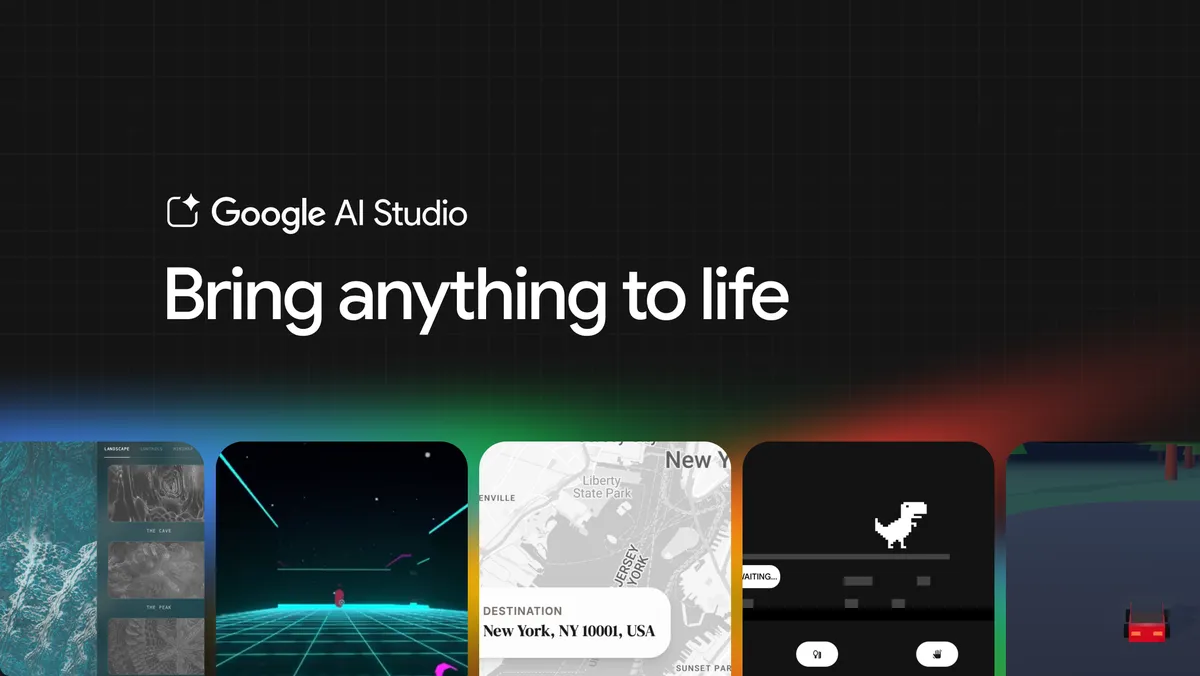
📰 The Scoop: Google AI Studio has launched what it's calling a "full-stack vibe coding experience". A new interface that lets users describe a web application in plain language and have Gemini's AI models generate not just the front-end design but the entire functional app, including backend logic and database connections. The idea is that someone with no coding experience could describe what they want to build and get a working, deployable application out the other side. The feature is available inside Google AI Studio and integrates with Google's existing cloud infrastructure for hosting and deployment. Google is positioning this as a major step toward making software creation accessible to non-developers.
🧠 What This Means: "Vibe coding" has become a term in the developer community for the practice of building software primarily by prompting AI rather than writing code line by line. It works like this: you describe the vibe of what you want, and the AI handles the technical implementation. Google's full-stack version is more ambitious than most, because it's not just generating a pretty front-end interface (what users see and interact with) but theoretically wiring up the whole system, like asking a contractor to build you a house by describing it, and having them handle the foundation, plumbing, and electrical, not just the paint colors. That said, it's worth being clear-eyed: generated code still often has bugs, security gaps, and architectural decisions that an experienced developer would catch, and "deployable" doesn't automatically mean "production-ready."
🔎 Why It Matters To You:
For non-technical entrepreneurs and small business owners, this genuinely lowers the barrier to building custom internal tools. Things like a simple customer intake form connected to a spreadsheet-style database, or a basic inventory tracker, without needing to hire a developer for every small project.
The honest "before vs. after" here: before these tools, building even a basic web app required knowing HTML, CSS, JavaScript, and at least one backend language, a learning curve of months to years. Now you can get a rough working version in minutes, though you should think of it as a starting point that still needs review, not a finished product you can hand off to customers without scrutiny.
Developers on X are notably skeptical, with some calling this a repackaging of existing AI coding tools (like Cursor or GitHub Copilot) with a new UI — so if you're a developer considering switching workflows, don't overhaul your setup based on the announcement alone; wait for independent benchmarks and real-world testing from the community.
Security is the thing most people won't think about until it's too late: AI-generated full-stack apps can inadvertently include vulnerabilities such as exposed API keys, insecure data handling, or missing authentication checks. So if you use this to build anything that handles real user data, get a security review before going live, even if the app "works."
🔮 Looking Ahead: The vibe coding trend is real and accelerating, and Google entering this space aggressively signals that AI-assisted development is moving from a developer productivity tool to something aimed at a much broader audience. The next 12–18 months will be telling, and if these tools can consistently produce secure, reliable, maintainable code, it will genuinely reshape who gets to build software. The more likely near-term reality is a hybrid world where AI handles the scaffolding and experienced developers focus on review, security, and the hard edge cases. Whether Google's implementation is meaningfully better than what already exists will become clear as real users put it through its paces.
Google's NewFront 2026: Gemini Comes to Advertising, And It's a Big Deal for What You See Online

📰 The Scoop: According to Google's Marketing Platform blog, at its NewFront 2026 presentation Google unveiled what it's calling the "Gemini advantage". A suite of features bringing its Gemini AI models directly into Google's advertising and marketing tools. This includes AI-powered creative generation (automatically producing ad copy, images, and video variations at scale), smarter audience targeting, and real-time campaign optimization that adjusts ad spending and placement as performance data comes in. The features are being integrated into Google Marketing Platform 360, which is used by major advertisers and media buyers. Google framed this as a fundamental shift in how advertising campaigns are planned, created, and optimized.
🧠 What This Means: Most people don't think much about how the ads they see are made, but it's actually a big operation. Creative teams write copy, designers make visuals, strategists decide who to target and when, and analysts review performance data to tweak campaigns. Google is now saying Gemini can handle significant chunks of all of that, automatically. Think of it like having a tireless marketing intern who can write 500 ad variations overnight, test them all simultaneously, and quietly redirect budget toward whichever ones are working. Except this intern is running on some of the most capable AI available today. As tech journalist Mark Thompson noted, the demos look impressive, but the real test is whether the results hold up in messy real-world campaigns versus controlled presentations.
🔎 Why It Matters To You:
As a consumer, this will affect the ads you see — Gemini-optimized campaigns can personalize ad content more granularly than before, meaning ads in your feed or on YouTube will be increasingly tailored not just to your demographic but to your specific browsing context and behavior patterns in near real-time.
If you work in marketing, communications, or media, this is the kind of automation that genuinely changes job descriptions. Not necessarily eliminating roles, but shifting them heavily toward oversight, strategy, and creative direction rather than execution. The people who thrive will be those who know how to prompt, evaluate, and steer AI-generated content rather than produce everything from scratch.
For small and mid-sized businesses that advertise online, AI-powered optimization was previously only available if you had a dedicated paid media team or agency. These tools, if they trickle down from the enterprise tier, could level the playing field, letting a small retailer run campaigns with the same sophistication as a national brand.
The data and privacy implications are significant: all of this real-time optimization depends on vast amounts of behavioral data, and as AI systems get better at using that data to influence what you see and click, the conversation around consent, transparency, and regulation is going to intensify. The EU's AI Act and evolving cookie regulations will create real friction for some of these capabilities in certain markets.
🔮 Looking Ahead: NewFront is where Google makes its pitch to major advertisers for the year ahead, and the Gemini advantage framing suggests Google is betting that AI differentiation, not just reach or inventory, will be its competitive advantage, or moat, against platforms like Meta, TikTok, and Amazon in the advertising market. The "Google is back" sentiment buzzing on X reflects genuine excitement, but the advertising industry is notoriously results-focused, and the proof will be in campaign performance data over the next few quarters. Watch for independent case studies and third-party measurement reports, which will tell a much clearer story than the polished demo reel.
Wanting to learn more about AI? Visit aitechexplained.com
Forward to a friend who will find this useful.
This newsletter is generated with the assistance of AI under human oversight for accuracy and tone.
